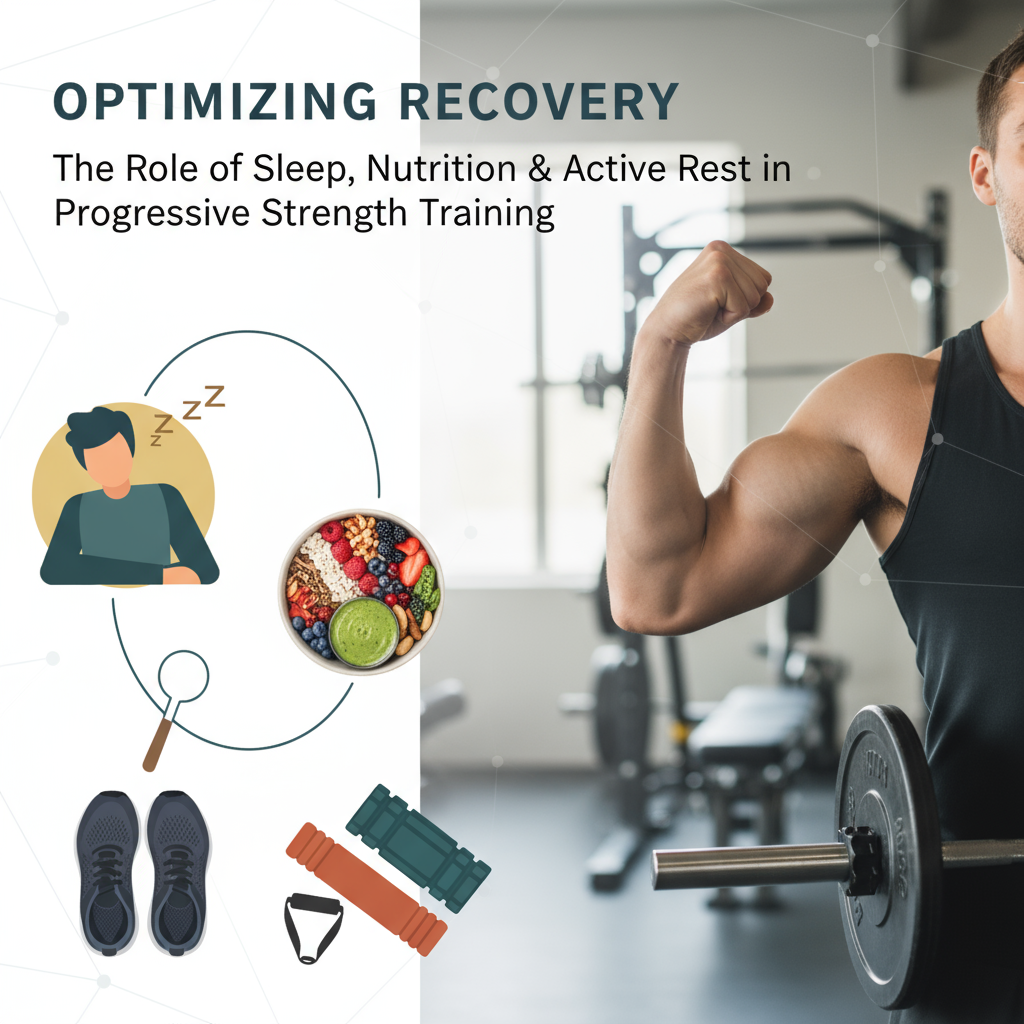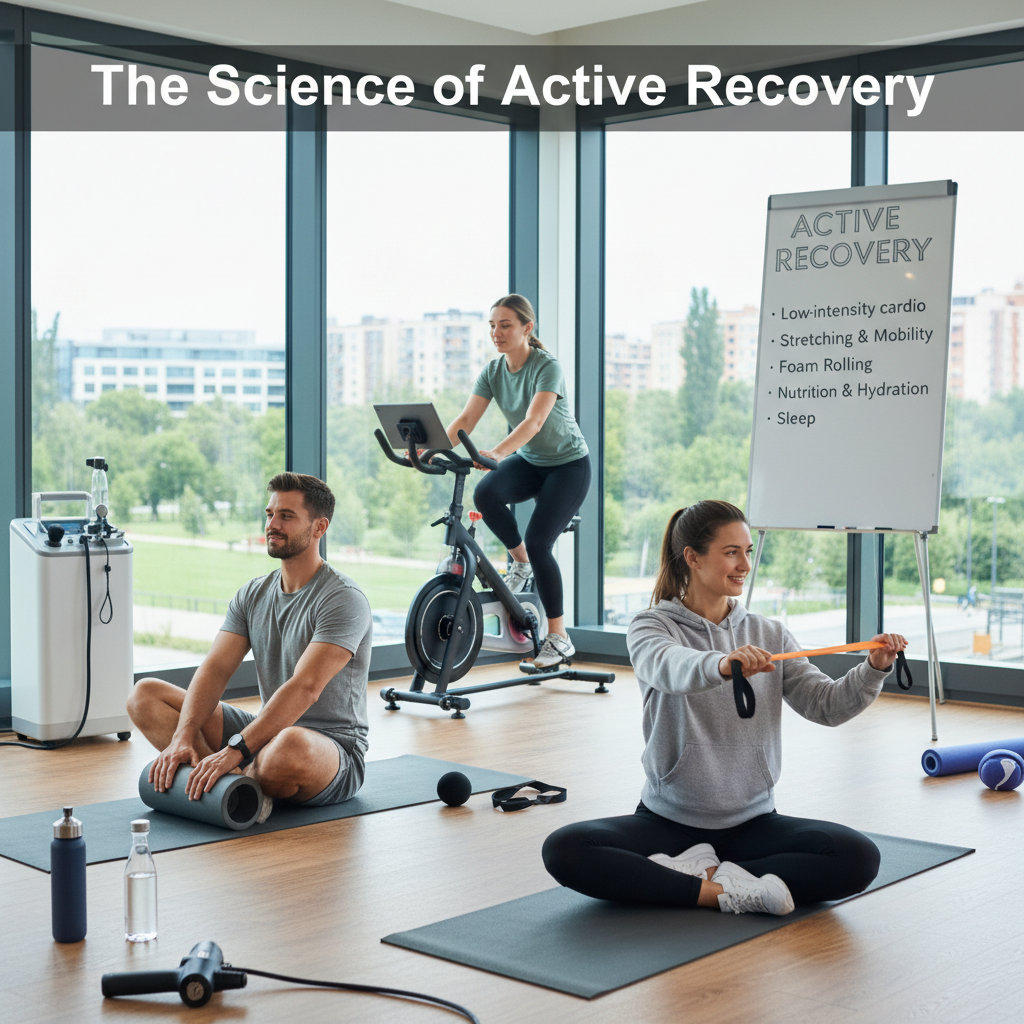
The Science of Active Recovery: How to Bounce Back Stronger After Intense Workouts
For athletes, busy gym-goers, and coaches who push hard but hate getting stuck on the couch with sore legs: you want the gains without the downtime, and you’re frustrated when soreness, fatigue, or stalled progress slows you down. The good news is that active recovery can turn those brutal 48 hours after a hard session into an opportunity to adapt, not a waiting game. Learn more about Optimizing Recovery. Our team of coaches and sports physiologists can guide you through evidence-backed recovery strategies (and, if you’d rather skip the trial and error, we can build and coach a plan for you).
What is active recovery?
Active recovery is low-intensity movement done after a hard workout or on a recovery day to accelerate exercise recovery, reduce soreness, and support muscle recovery. Think of it as purposeful, light activity (walking, easy cycling, mobility work) that promotes blood flow and movement without adding training stress. It’s not a gentle cool-down (though cool-downs are a form of active recovery), and it’s definitely not a full-intensity session.
Active recovery vs passive recovery: which one should you pick?
Passive recovery means rest (sitting, lying down). Active recovery uses low-intensity movement. Both have roles. Use passive rest when you’re injured, sleep-deprived, or need absolute rest. Use active recovery to clear metabolic byproducts, ease stiffness, and maintain movement patterns. From what I’ve seen, people overdo passive rest and come back stiffer; a short, easy walk usually helps much more. Learn more about differentiate between muscle growth pain and injury. Learn more about injury prevention tactics.
How active recovery actually works - the science explained
So here’s the thing about active recovery: it helps in multiple ways, not just one. That’s why it’s so powerful.
- Improves blood flow - Light activity increases circulation, delivering oxygen and nutrients to muscle tissue and speeding removal of waste products that accumulate during intense exercise (like lactate).
- Accelerates lactate clearance - Active movement clears lactate faster than total rest, which often reduces the burning feel and helps you feel fresher sooner.
- Reduces muscle stiffness and maintains range of motion - Gentle movement prevents adhesions and preserves joint mobility (mobility today means performance tomorrow).
- Supports neural recovery - Low-intensity movement helps the nervous system reset without the overload that comes from heavy lifting or sprinting.
- Helps inflammation and repair - Movement stimulates lymphatic flow and may help the inflammatory process resolve efficiently, aiding muscle repair and adaptation.
There’s nuance though. For strength athletes, too much cold water immersion or aggressive icing after resistance training can blunt hypertrophy over time. So use some methods selectively (more on that below).
Best active recovery methods and exactly how to do them
Here are practical, specific recovery tips you can use today. I write these like I coach athletes—short, specific, and useful.
Easy aerobic work (walking, cycling, swimming)
What to do: 10 to 30 minutes at 50 to 65 percent of max heart rate, or RPE 2 to 4 (you can talk in full sentences). For a hard leg day, a 15-minute walk within 2 hours after the session helps. On a recovery day, 20 to 40 minutes of easy cycling does wonders.
Mobility and dynamic stretching
What to do: 10 to 15 minutes of hip openers, ankle mobility, thoracic rotations. Use slow, controlled movement. Keeps you functional and reduces soreness. Try 8 to 12 reps per movement.
Foam rolling and soft tissue work
What to do: 1 to 2 minutes per muscle group. Use it as a movement primer, not a punishment. It can reduce the subjective feeling of soreness and improve short-term range of motion.
Light resistance circuits
What to do: Bodyweight or very light loads, 6 to 12 minutes. Examples: slow air squats, band rows, hip bridges. This keeps neuromuscular patterns alive without stressing recovery systems.
Contrast baths, cold water, and compression
What to do: Contrast baths (1 to 2 minutes cold, 2 to 3 minutes warm, repeat 3 to 6 cycles) can help perceptions of recovery and circulation. Use cold water immersion occasionally—no more than 10 minutes at 10 to 15 Celsius—if you’re racing frequently. Note: frequent cold immersion after strength work may blunt gains.
Sleep, hydration, and protein
Yes, they’re boring but critical. Aim for 7 to 9 hours of sleep, 0.25 to 0.4 grams protein per kg bodyweight per meal across 3 to 4 meals if you're training hard, and steady hydration (urine pale straw color). These are giant levers for recovery that can’t be replaced by foam rolling.
How often and when should you do active recovery?
Short answer: after hard workouts and on recovery days. More detailed answer: use active recovery within 24 to 48 hours after a high-intensity or high-volume day (especially legs), and schedule 1 to 2 intentional active recovery days per week depending on your training load.
- After HIIT or sprint work: 10 to 20 minutes of easy aerobic work later the same day, and a 20 to 40 minute easy session the next day.
- After heavy resistance sessions: a short walk and mobility work same day; a 20 to 30 minute light session 24 hours later if you feel up to it.
- During multi-day races or tournaments: active recovery sessions of 20 to 40 minutes between competitions to speed lactate clearance and prevent stiffness.
Listen to markers: persistent heavy legs, rising resting heart rate, prolonged soreness, or poor sleep means dial back. But if you’re just sore and can move with an easy heart rate and good sleep, active recovery will usually help.
Common mistakes people make with active recovery
People often think more movement always equals better recovery. Not true. Here’s what I see a lot.
- Doing too much intensity - You can’t do intervals on a recovery day and expect benefit. Keep intensity low.
- Using recovery modalities blindly - Cold baths are great for soreness and perception, but using them after every strength session may reduce muscle growth. Choose based on goals.
- Neglecting nutrition and sleep - Movement won’t fix poor protein intake or chronic sleep debt.
- Ignoring individual differences - A 70 kg marathoner and a 95 kg powerlifter have different recovery needs. Customize.
Simple 7-day example: how to add active recovery into a weekly plan
Here’s a practical template you can adapt. It’s for someone doing 4 hard sessions per week.
- Monday - Heavy lower body session. Post-workout: 12-minute easy walk + 10 minutes mobility.
- Tuesday - Active recovery day: 25-minute easy bike at RPE 3 + 10 minutes foam rolling.
- Wednesday - Upper body strength. Post: 10-minute walk, shoulder mobility.
- Thursday - Interval training. Post: 15-minute easy swim or walk + contrast bath optional.
- Friday - Active recovery: 30-minute brisk walk/hike, easy pace, focus on movement quality.
- Saturday - Moderate full-body session or long aerobic session. Post: mobility, protein-rich meal.
- Sunday - Rest or gentle mobility, sleep catch-up if needed.
This plan balances stress and recovery and can be adjusted for frequency, competition, travel, or illness. If travel or an event wrecks the schedule, a 20-minute walk and a quality protein meal will often keep things from derailing.
How to measure if active recovery is working
Keep it simple. Track these objective and subjective metrics.

- Performance markers: are your lifts and runs holding steady or improving?
- Resting heart rate: a 3 to 7 beat increase vs baseline across multiple days can flag poor recovery.
- Soreness and range of motion: do you feel more mobile and less stiff?
- Sleep quality and mood: better sleep and mood usually mean recovery is on track.
If metrics move the wrong way, drop intensity, prioritize sleep and protein, and consider a passive rest day.
Quick troubleshooting: when active recovery isn't helping
Sometimes active recovery feels useless. Why? Because the real limiter might be sleep, calorie deficit, or overtraining. Here’s what to do.
- Check sleep first: if you’ve had less than 6 hours most nights, prioritize sleep over a recovery ride.
- Check calories and protein: under-eating blunts repair; increase protein and overall intake for a few days.
- If pain vs soreness: if sharp pain or joint swelling shows up, see a clinician. Don’t power through.
From my experience, the single easiest fix is always sleep. Get sleep right, and active recovery works much better.
Practical recovery tips you can use today
- Within 60 minutes after a hard session, do a 10 to 15 minute easy walk and have 20 to 30 grams of protein.
- On recovery days, keep workouts under 40 minutes and at low intensity (talk test).
- Rotate modalities: one day foam roll, next day gentle yoga, next day an easy bike ride—variety helps.
- Use cold or contrast baths selectively, not after every session if hypertrophy is a priority.
If this feels overwhelming, our team can handle it for you—creating daily recovery plans that match your training, travel schedule, and goals. We work with athletes who want to hit PRs without burning out, and we’ll show you exactly what to do, step by step.
FAQ
Does active recovery reduce muscle soreness?
Yes, active recovery often reduces perceived muscle soreness and stiffness more than passive rest, especially in the first 24 to 48 hours. Light movement increases blood flow and helps clear metabolic byproducts. That said, it won’t erase delayed onset muscle soreness completely after a very intense session.
How long should an active recovery session last?
Most effective sessions are short: 10 to 40 minutes depending on the day and your fitness. Immediately after workouts, 10 to 20 minutes is usually enough. On dedicated recovery days, 20 to 40 minutes of low-intensity movement is ideal.
Will active recovery hurt my muscle gains?
Generally no, if you keep intensity low. But frequent use of cold water immersion after resistance training has been shown to blunt some hypertrophy signals. Use cold therapy strategically, not every session, if your goal is muscle growth.
Can I do active recovery after every workout?
You can and often should do short active recovery (a 10 to 15 minute walk + mobility) after most hard workouts. Longer active recovery sessions (30+ minutes) are better on non-training days or when fatigue is moderate. Adjust based on how you feel.
What’s the best way to start if I’m new to active recovery?
Start simple: add a 10-minute walk after your next hard session and 20 minutes of easy cycling or walking one day a week. Add foam rolling and 10 minutes of mobility. Track how you feel over a week. Small, consistent steps win.